Introduction
The first brief of the module was to create a short-form immersive audio-visual projection mapping installation. While the outcome was a 2- to 3-minute piece, the expectations of the assignment extended way further than the duration alone. We were required to demonstrate evidence of contextual research, technical experimentation, concept development, and professional standards of production across both sound and video. In this sense, the brief functioned as an introduction to contemporary installations, which would be the main theme throughout the mixed realities module, where technology, space, narrative, and audience experience must operate together rather than separately to create an immersive experience.
For this project, I worked with Pau, Jack, and Archie. As a team, none of us had previously used MadMapper, the industry standard projection mapping software introduced to us for the brief. This initially presented a challenge, but it quickly became one of the most productive aspects of the project. Because we were all learning from square one, the early stages became highly collaborative and exploratory. Instead of beginning with a fixed idea and forcing it into this unfamiliar software, we approached the process by first understanding the technology and then allowing the capabilities of the software to influence a realisable concept.
Initial Research and Technical Exploration
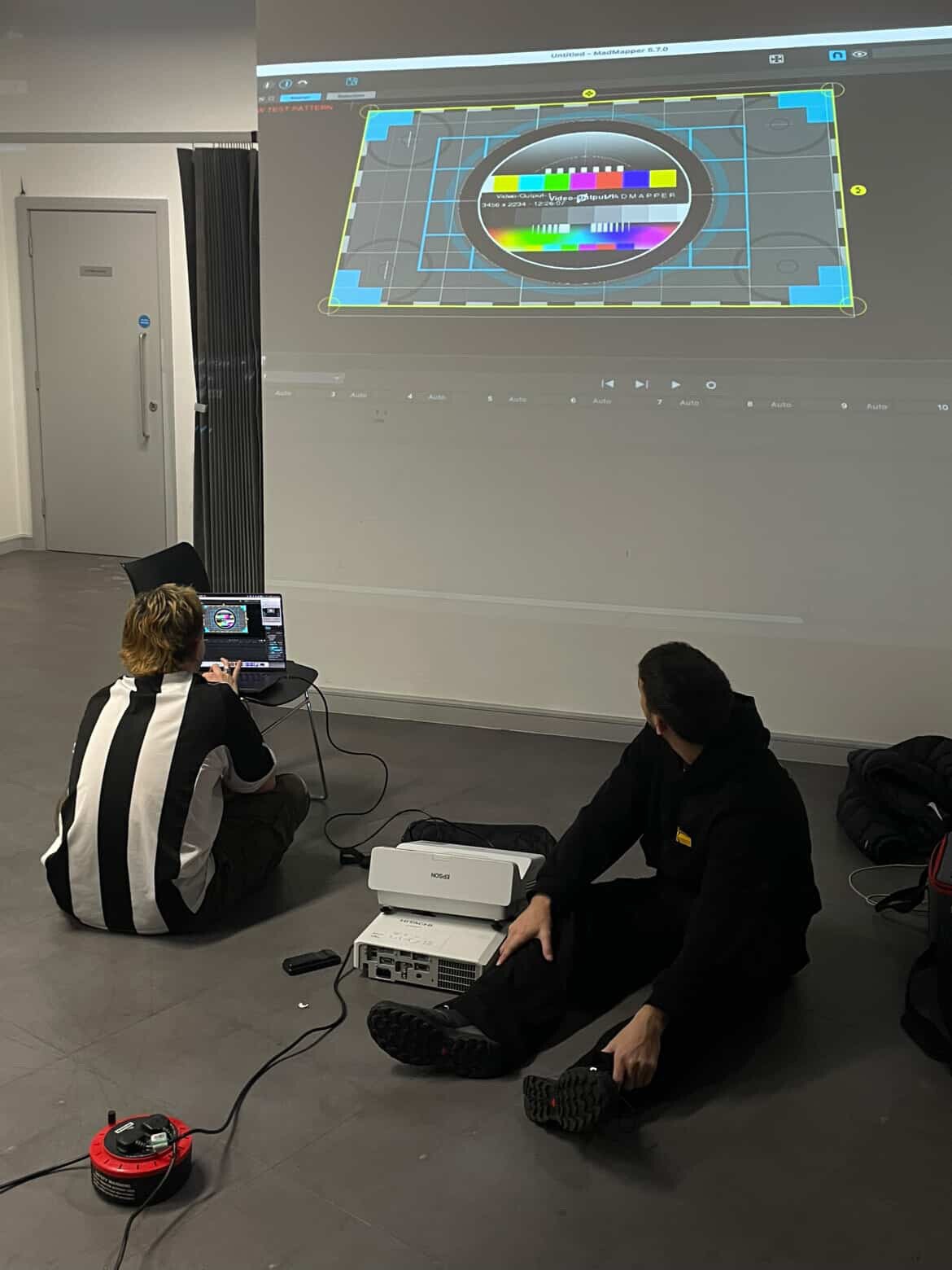
Week One was mainly dedicated to experimentation. We worked with an available Epson EB750F, tested tools within MadMapper, and explored how digital content could be stretched, warped, and aligned across physical surfaces. This stage was especially valuable because it moved our understanding of projection beyond simply displaying video on a wall, which at first was what we expected the project to be, but we began to recognise that projection mapping is most effective when the surface itself becomes part of the narrative structure. Angles, folds, texture, and spatial arrangement all influence how the content is perceived.
Although we did not finalise a concept in the first week, partly due to Archie being absent, the time spent was far from wasted. It gave us technical confidence and helped us identify what scale of idea would be achievable within the four-week deadline. It also encouraged us to think in terms of immersive environments rather than conventional single-screen editing.
Concept Development and Historical Research
Once the full team was present in Week Two, we moved into structured idea generation. Through discussion, brainstorming, and consideration of the emotional potential of projection mapping, we found ourselves repeatedly returning to historical themes, such as war and its scale of destruction. Projection has the ability to surround viewers and create emotional atmosphere, so we wanted to apply it to a subject that justified this immersiveness, rather than using the technology for purely novel purposes.
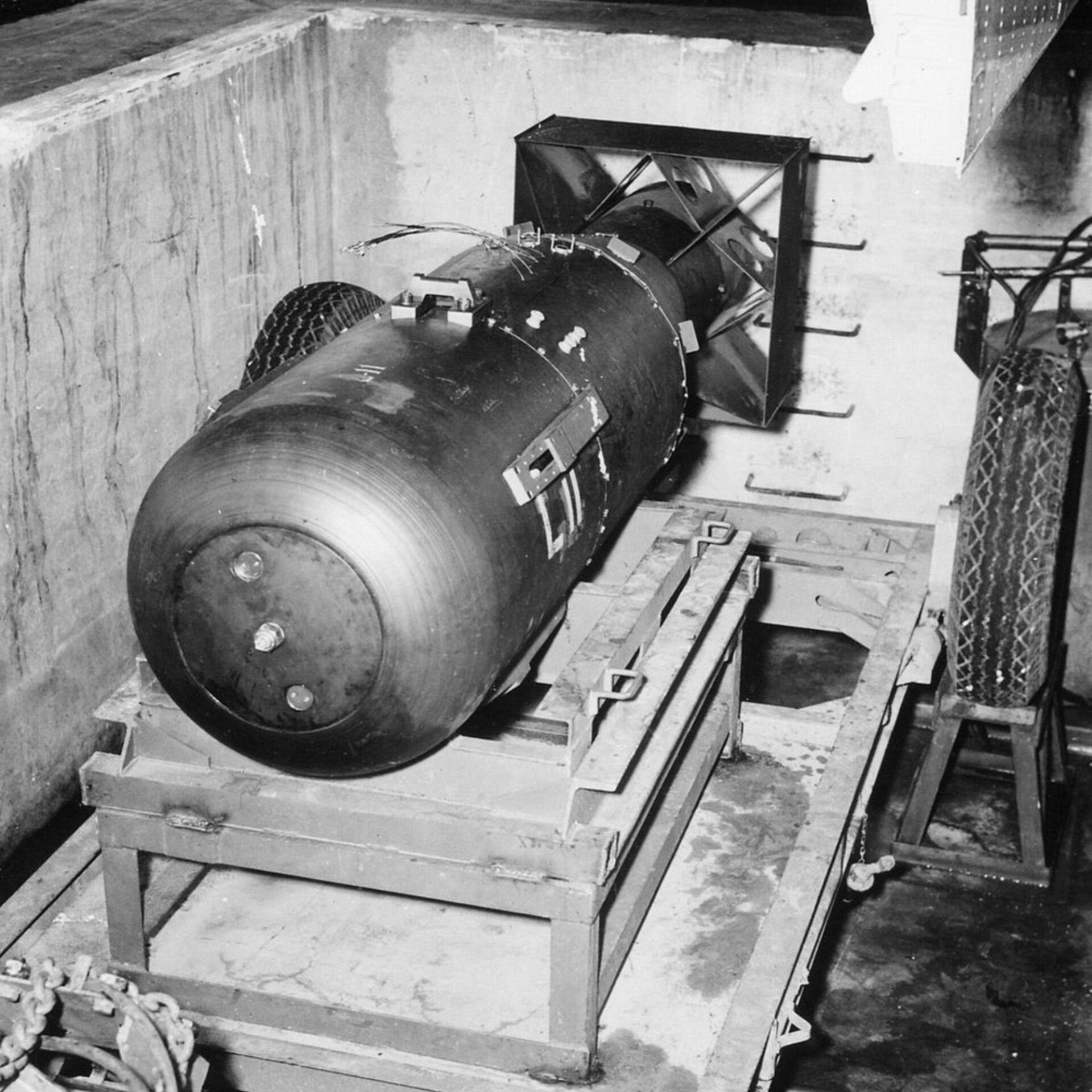
This led us to the atomic bombing of Hiroshima in 1945, alongside the broader historical context of nuclear escalation, the Manhattan Project, and the cultural mindset of wartime America. We selected Hiroshima because of the scale of devastation and its lasting significance in global history. It remains one of the clearest examples of technological progress snow-balling into total, ethical catastrophe. We wanted to create an installation that was respectful, emotionally affecting, and educational, functioning almost as a museum exhibit rather than simply an entertainment piece.
Our research process involved sourcing archival footage, wartime broadcasts, documentary clips, historical photography, and public domain media from online archives, YouTube, Facebook repositories, and wider internet sources. As we researched, it became clear that much of the most accessible media framed the event through an American perspective. This often focused on military success, technological achievement, or bogus political justification rather than the lived experience of Japanese civilians. Recognising this bias became an important part of our critical thinking during development.
In retrospect, I believe this was one of the project’s most valuable learning points. While some of the American perspective was intentionally used to comment on propaganda and public detachment, I also recognise that future iterations of this project could include more direct Japanese voices, testimonies, and perspectives to create a more ethically balanced representation.
Final Concept and Spatial Design
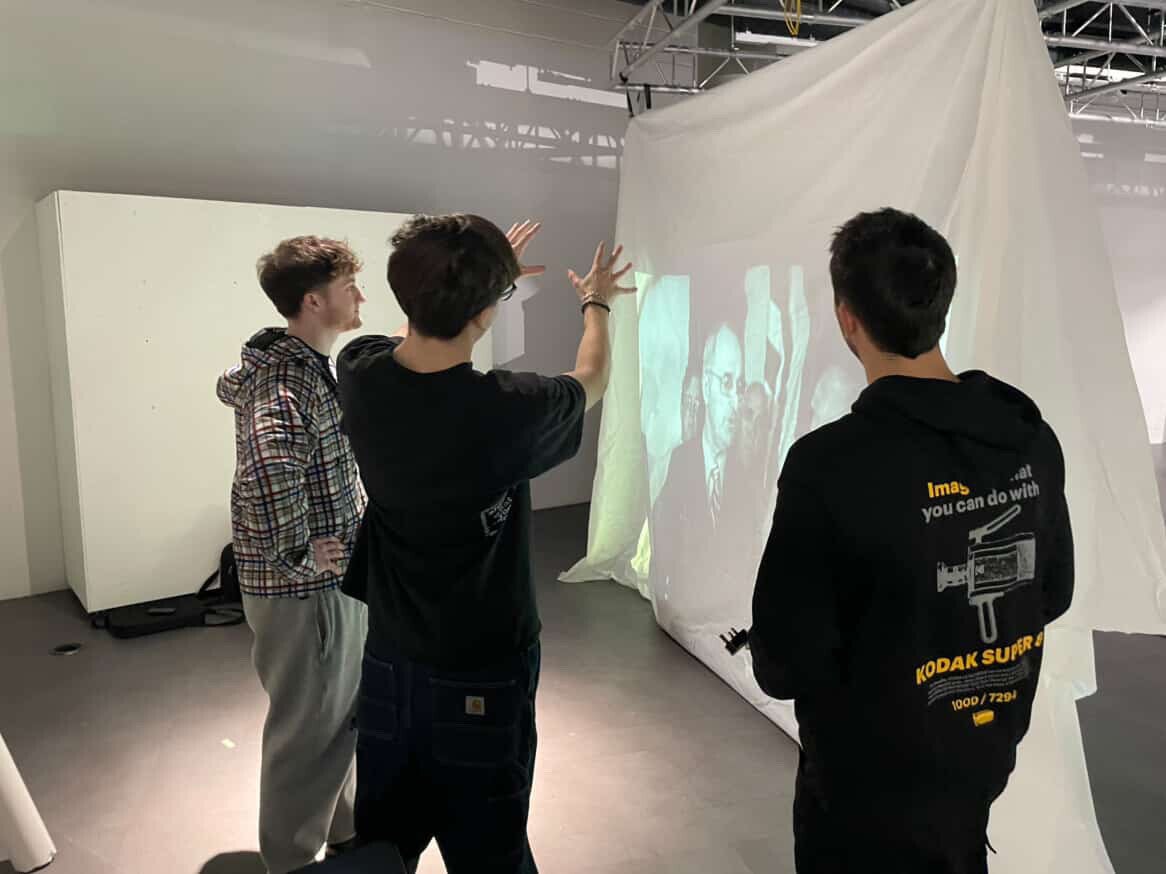
The final concept took the form of a three-screen immersive projection installation. The central screen acted as the primary narrative display, presenting the main sequence of archive footage and key visual moments. Two angled side screens functioned as supporting surfaces, extending the world of the piece through contextual imagery, atmospheric footage, and visual reinforcement.
This specific arrangement was important because it changed the audience’s relationship with the content. Instead of watching a single frame like being at the cinema, viewers were placed inside a wider visual environment where information surrounded them. The side projections also helped create a sense of escalation, as the central narrative was constantly supported by peripheral imagery.
The piece gradually built toward a final symbolic climax: a physical spotlight cast a human shadow onto the projection surface, referencing the permanent “nuclear shadows” left on walls and pavements in Hiroshima after the blast. This moment was intended to move beyond historical explanation and create an immediate emotional response. Rather than simply telling the audience about devastation, it allowed them to witness an eerie and impactful trace of human absence.

Sound Design and Symbolic Contrast
One of the strongest creative decisions in the project was the use of the song Orange Coloured Sky, recognised by many through the Fallout game franchise and its in-game Diamond City Radio soundtrack. I selected the track after researching potential music that could capture both the historical era and the conceptual tone of the installation.
The upbeat, playful nature of the song created a deliberately disturbing contrast when paired with imagery of nuclear destruction. Lyrics celebrating an “orange coloured sky” became sinister when interpreted through the visual context of atomic fire and fallout. This juxtaposition reflected the project’s wider themes of propaganda, obliviousness, and the sanitisation of violence through media culture. Rather than using tragic orchestral music, which may have guided emotion too directly, the cheerful soundtrack encouraged a more complex and unsettling audience reaction.
I believe this decision significantly strengthened the work, as it transformed the installation from a basic historical montage into a more layered commentary on perception and ideology.
Production Process and Technical Problem-Solving
Week Three focused on assembling the final media and solving workflow issues. The main edit was developed collaboratively in Adobe Premiere Pro, with Archie leading the timeline while the rest of us verbally contributed, giving sequencing ideas, pacing suggestions, and feedback on rhythm and visual impact.
At the same time, I worked on resolving one of the most significant technical challenges of the project: how to construct one video composition that could later be divided accurately across three separate projection surfaces in MadMapper. This required me to consult with Danny in the X Gallery, where we discussed dimensions, projector spread, and aspect ratios.
The solution involved designing a wide-format master sequence in Premiere Pro where the central section contained the main narrative content and the side areas contained supporting visuals. Once imported into MadMapper, these sections could be cropped, duplicated, and aligned to their respective screens while remaining synchronised. Solving this issue was crucial, as without it the installation would have lacked cohesion.


Installation and Presentation
For the final presentation, suspended sheets of cloth were rigged from the ceiling to act as projection surfaces. This immediately enhanced the installation by making the screens feel temporary, ghost-like, and sculptural rather than static or domestic. With assistance from all the lecturers, we installed the projectors, primarily using the Epson EB750F laser projector, supported by a secondary Hitachi projector for the side screens.
We also tested multiple lighting options before selecting the Aputure LS 60X, which provided the strongest and cleanest beam for the final shadow sequence. Tutor feedback during setup hinted towards increasing the intensity and sharpness of the shadow effect, which we managed to adjust successfully.
The final installation remained highly faithful to our original concept and functioned effectively on presentation day. Audience and tutor feedback was very positive, particularly regarding the ambition of the concept, the immersive layout, and the emotional impact of the concept itself.
Critical Reflection (Gibbs’ Reflective Cycle)
Reflecting on the project, I initially felt some uncertainty due to the unfamiliar software and short timescale. However, this quickly shifted into confidence as the team adapted and the concept gained clarity. By the final presentation, I felt proud not only of the outcome but also of how professionally the group had worked under pressure.
The strongest aspects of the project were our teamwork, willingness to experiment, and the coherence of the final installation. Despite beginning with no prior MadMapper experience, we developed a technically successful piece that felt polished and purposeful. I also believe the work successfully demonstrated that projection mapping can be used for serious historical storytelling rather than spectacle alone.
A further strength was the emotional contrast created through sound and image. The use of cheerful music against catastrophic visuals encouraged audiences to think critically about how history is framed, remembered, and consumed.
The main weakness of the project was representational imbalances. While our use of American archive footage helped communicate themes of propaganda and public detachment, the project would have been stronger had it grounded itself in more Japanese perspectives and survivor narratives. This would have deepened the emotional and ethical dimension of the installation.
If I were to redevelop the piece, I would also expand the physical environment by adding a fourth projection surface above the audience. A ceiling canopy showing smoke, burning skies, or abstract fallout imagery would have absolutely intensified immersion.


Conclusion
Overall, this was a highly successful first brief that combined research, technical experimentation, conceptual storytelling, and collaborative production into a cohesive final installation. It demonstrated how immersive media can communicate historical trauma in a way that is emotionally immediate and spatially engaging. Just as importantly, it taught me that the most effective use of technology is not in showing what software can do, but in using it to serve meaning, atmosphere, and audience reflection.
Create Your Own Website With Webador